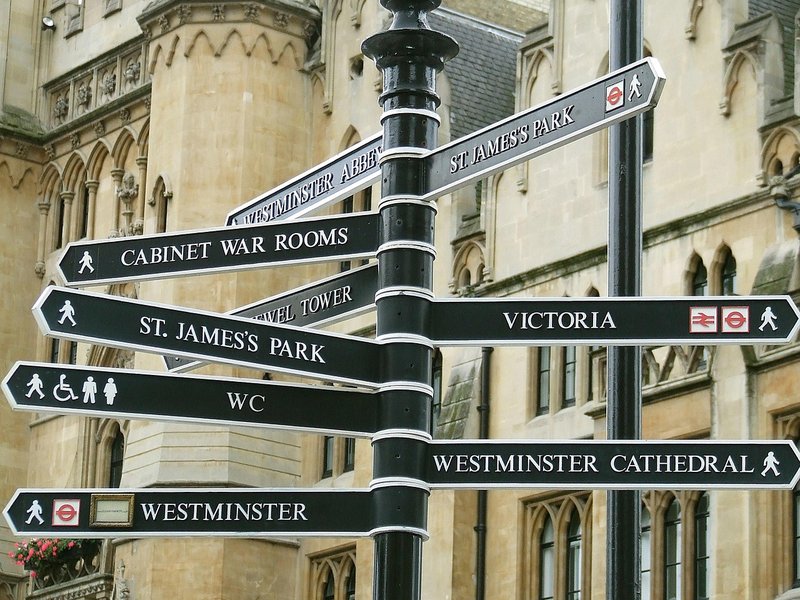
London is full of weird and wonderful stories that give an intimate insight into the past and the many lives that have called this city “home”.
One place that many people forget to look is at the street signs. It’s only when you’re not putting one into a maps app on your phone that you realise what you’ve just typed is unusual…to say the least.
Read on to find out the back stories of 10 of London’s street names and their backstories. They’re worth it, we promise!
1. Knightrider Street (EC4)
Contrary to the 80s TV show, this has nothing to do with talking cars.
Just as the name suggests, in the medieval era, this was the direct route taken by knights riding from the Tower of London to Smithfield for tournaments. What’s even better is that it leads to an intriguing little side street called Wardrobe Terrace.
Wardrobe Terrace is so named because old Edward III moved his outfits from the Wardrobe Tower, now in ruins at the Tower of London, to this spot.
2. Bleeding Heart Yard (EC1)
Located in Holborn, the name is as macabre as it sounds, if you don’t mind dabbling in urban legends.
Legend says it’s named after Lady Elizabeth Hatton, who was allegedly murdered there in 1626; some say her body was found torn limb from limb, but her heart was still pumping blood onto the cobblestones. Historians, however, suggest it might just be named after a pub sign depicting the Virgin Mary.
But…that didn’t stop Charles Dickens from including this oddly-named area in Little Dorrit.
3. Ha-Ha Road (SE18)
Home to some of the friendliest people in London…no, obviously that is a joke.
Located in Greenwich, Ha-Ha Road’s name comes from a specific landscape feature called a "ha-ha", a sunken ditch that acted as a boundary for livestock without spoiling the view of the park.
Still, it doesn't stop passersby pointing and saying “Ha-ha!” does it?
4. Artillery Lane (E1)
Found in Spitalfields, this was originally the site of the Old Artillery Ground.
In the 16th century, the "Fraternity of Artillery" (longbow, crossbow, and handgun users) practiced here.
What’s more, archery was actually more than just a hobby during the Tudor period. The Unlawful Games Act of 1541 mandated that all able-bodied men aged 16-60 had to own a longbow, possess arrows and practice every Sunday and during holidays.
5. Pall Mall (SW1)
This famous posh thoroughfare takes its name from a 17th-century game called "paille-maille" (ball and mallet). It was a precursor to croquet and was a favorite pastime of King Charles II, who, along with the restoration of the monarchy, brought back pastimes just for fun.
The street was essentially the site of the royal "paille-maille" court.
6. Birdcage Walk (SW1)
Running alongside St. James’s Park, this street gets its name from King James I’s Royal Menagerie. He kept exotic birds in cages along the road so that the royals could admire them while strolling toward Buckingham Palace which, thankfully, are no longer there because birds are free to fly the skies as they like.
Of course, there’s one particular species of bird that looks very out of place in and around St James’s Park: pelicans. They’ve lived in St James's Park for over 350 years, first introduced in 1664 as a gift from the Russian Ambassador to King Charles II.

7. French Ordinary Court (EC3)
This tiny alleyway near Fenchurch Street has a culinary origin.
An "Ordinary" was a 17th-century term for a fixed-price meal served at a common table. A popular French restaurant stood here after the Great Fire of 1666, offering a "French Ordinary" to the hungry merchants of the city.
8. Wardour Street (W1)
Now the heart of Soho’s film and media industry, the street was named after Sir Edward Wardour, a 17th century politician who owned the land.
However, it was once known as "Old Soho" and became famous in the 18th and 19th centuries as London’s centre of the "antique" furniture trade (much of which was actually fake or "distressed" to look old!).
9. Petticoat Lane (E1)
Though now officially called Middlesex Street, everyone still uses its old name. It was famous for the sale of second-hand clothes. The Victorians changed the name to Middlesex Street because they found the mention of "petticoats" (a woman’s undergarment) too scandalous for a street sign.
During the Tudor period, it is believed to have been known as Hogs Lane. This particular street was severely affected by the Great Plague in 1665.
10. Savoy Hill (WC2)
This street marks the site of the Savoy Palace, once the grandest noble residence in London until it was burned down during the Peasants' Revolt in 1381.
Later, it became the site of the first BBC broadcasting studios (2LO), making it the birthplace of British radio.
Find More Things to Do in London with CityDays
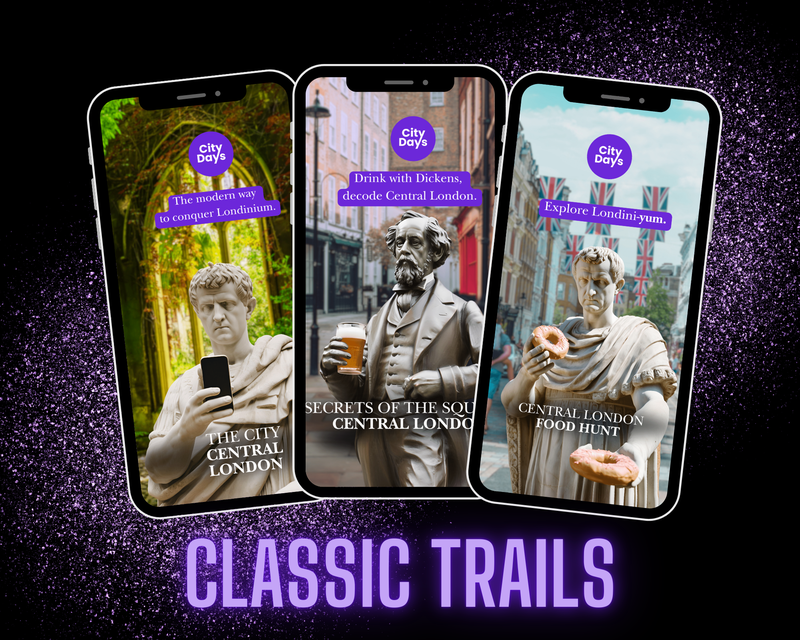
Whatever your interests are, there’s always something new for you to discover in London.
In fact, you don’t have to go out of your way at all to find them - you just have to know where to look.
Discover London’s secret sights and noteworthy nooks by playing one of our London treasure and scavenger hunts, food experiences, escape room games or walking tours.
Looking to provide the best team building activities in London? Look no further.
You’ll find curated trails and hunts all over London, including Central London, Mayfair, Shoreditch, Kensington and Southwark.
All you have to do is team up with your partner, friends, family or whoever to solve riddles, complete challenges and answer trivia to lead you on an unforgettable journey around London’s most intriguing streets.
The best part? We’ll recommend top-rated pubs, cafés and restaurants and give your team the chance to earn rewards by competing on our leaderboard.