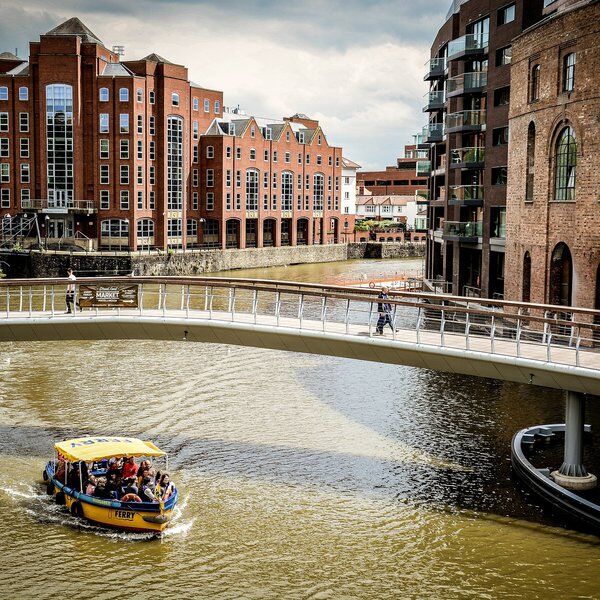
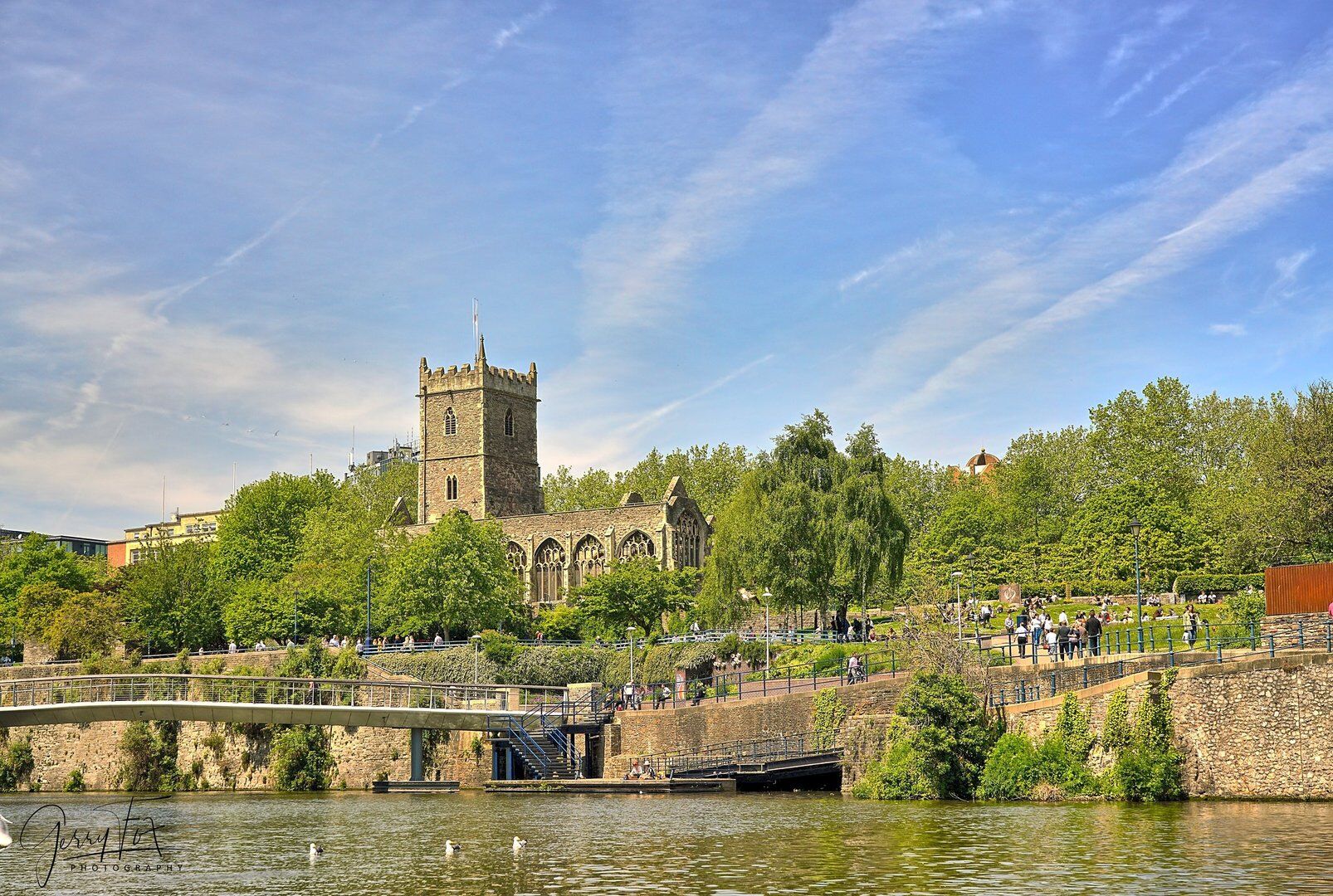
Ask any Bristolian where Castle Park Bristol is, and there’ll be no hesitation. As the city’s primary lungs, this sprawling riverside sanctuary where office workers take their lunch and students bask in the (rare!) West Country sun is so familiar to many of us that we never question its existence.
A place of blooming flower beds, cyclists, and the quiet ebb and flow of the Floating Harbour, it’s no wonder that it’s a favourite for picnics and daily plods alike. Yet, beneath the manicured lawns and gravel paths lies the literal foundation of the city.
For centuries, this wasn't an open space in the centre of a city, but the most densely packed quarter of Bristol, dominated by a formidable royal fortress and a labyrinth of medieval shopping streets. It took the devastating intervention of the 1940 Bristol Blitz to clear the land, turning a bustling commercial hub into a silent memorial overnight.
If you know where to look, the "hidden stories" of Castle Park Bristol are etched into every stone and ruin, waiting for the modern city to remember its origins. Come along with us as we uncover them…

Race Across the World: The Experience in Bristol is Available NOW
Race Across The World: The Experience is the official live experience of the award-winning hit TV show, brought to life in a high-stakes adventure across Bristol.
This 2-3 hour footrace involves budgeting, strategising, and visiting plenty of hidden gems and iconic landmarks in a bid to reach the final checkpoint first. To get there, you’ll need to work together and make vital decisions that will impact your overall score.
Important Info: You must be 18+ to purchase tickets. The experience is designed to be accessible and inclusive. See FAQs for details. Tickets from £20 per adult player.
The Fortress That Gave the City Its Name
Before we get into the real history of Castle Park Bristol, we have an obvious bone of contention to clear up. As anybody who has been to Castle Park will attest, there isn’t a castle in sight.
Think about it, have you ever seen a castle in Bristol?
You’re not wrong to wrinkle your brow in confusion.
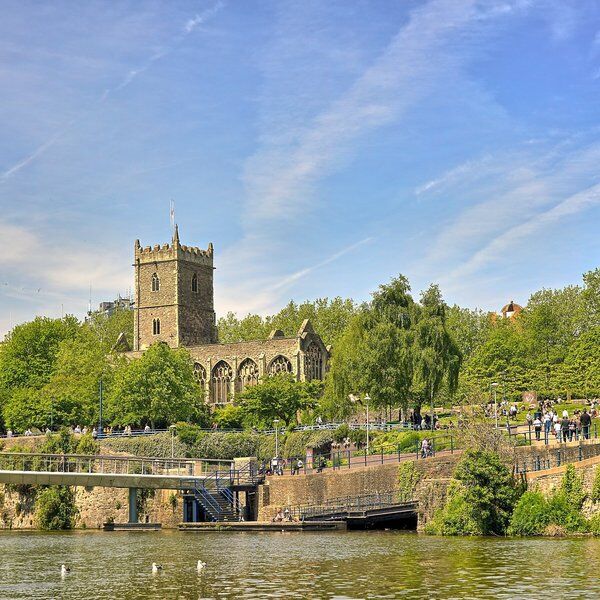
The Might of Bristol Castle
In the 11th century, shortly after the Norman Conquest, a massive timber and earthwork fortress was erected here, later rebuilt in formidable stone. At its peak, Bristol Castle was a sprawling complex that rivalled the Tower of London in scale and importance.
Just as with most castles, its intention was to provide a defensive structure and a royal residence to host the various kings, queens and courts that passed through the West Country.
According to an article written in the South Gloucestershire Gazette in 1930, “The castle was built by Robert Earl of Gloucester, and was held to be one of the largest and most impregnable in the land. Its area was six acres and the great tower stood near the end of Narrow Wine Street.”
However, it also held a darker reputation as a high-security prison for political enemies of the Crown. The castle’s massive keep dominated the skyline, serving as a constant reminder to the medieval citizens of the sheer power of the monarchy. Among those who were detained within its walls were Edward II, King Stephen, and Princess Eleanor in 1202.
The Great Levelling
So where did this terrific building go, and why does nobody talk about it much today? Well, we have a pivotal moment in English history to thank for that, and it even has a name: The Great Levelling.
When the English Civil War broke out in 1630, the city took the Parliamentary side and the castle into its ownership. However, it was recaptured by Royalists and in 1654, Oliver Cromwell ordered its total destruction to prevent it being taken back by the opposition.
The demolition wasn’t straightforward as the castle had been in a severe state of disrepair even by the 13th century, so a systemic "levelling" of the fortifications was necessary. The walls were pulled down, and the stone was largely repurposed for local building projects.
Newspaper advertisements from the 1920s show that Bristol Castle’s remains were being used to house Bristol Castle Sweeteries, a confectionery and sweet shop.
Today, only fragments survive, such as the vaulted chambers of the sally port and the foundations tucked away near the park’s entrance.
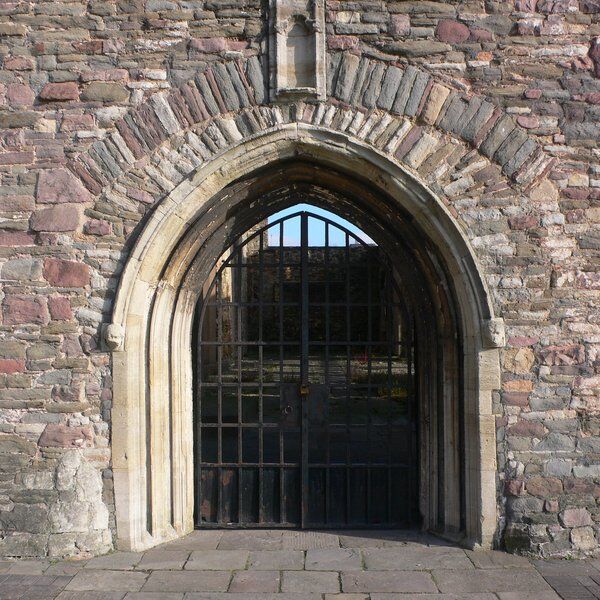
St Peter’s and the Lost Streets of Mary-le-Port
If the castle ruins represent the distant medieval past, the skeletal remains of St Peter’s Church and the surrounding lawns represent a much more recent, and painful, chapter in Bristol’s narrative.
A Monument to Resilience: St Peter’s Church
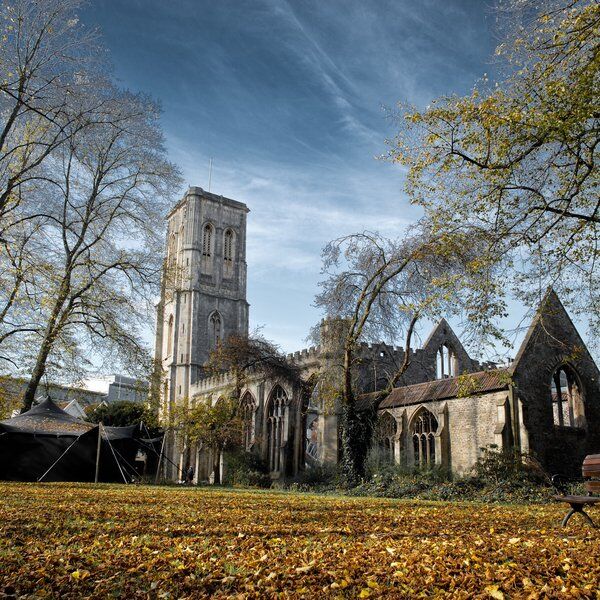
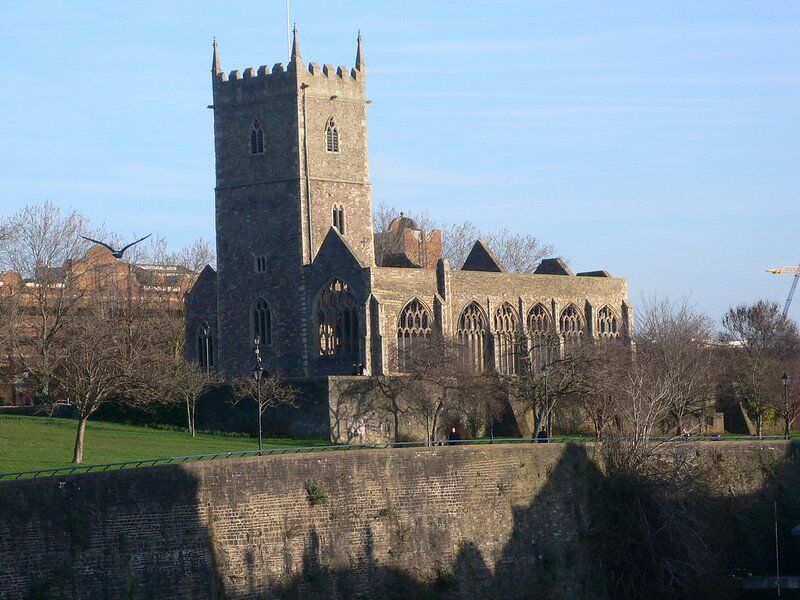
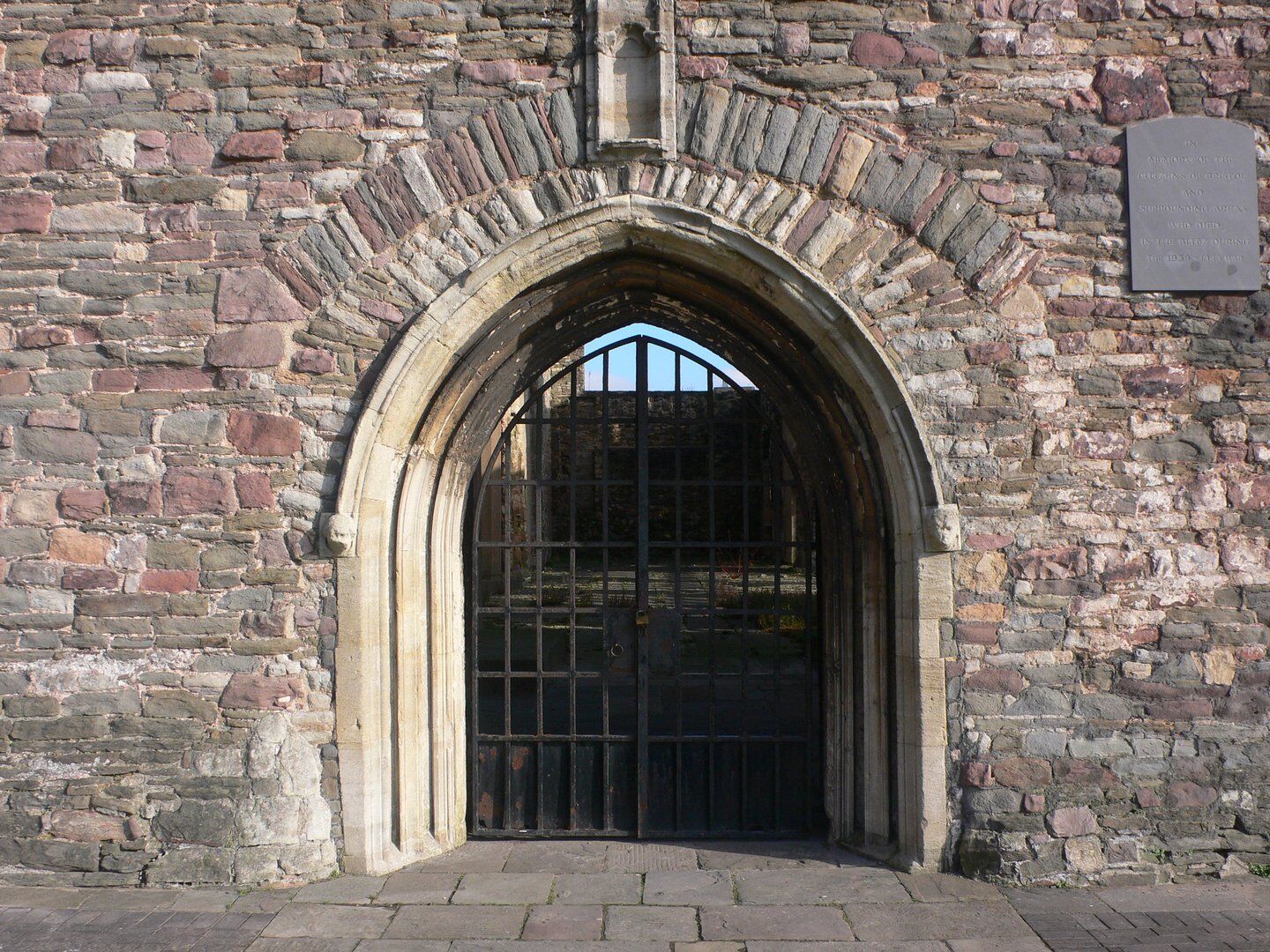
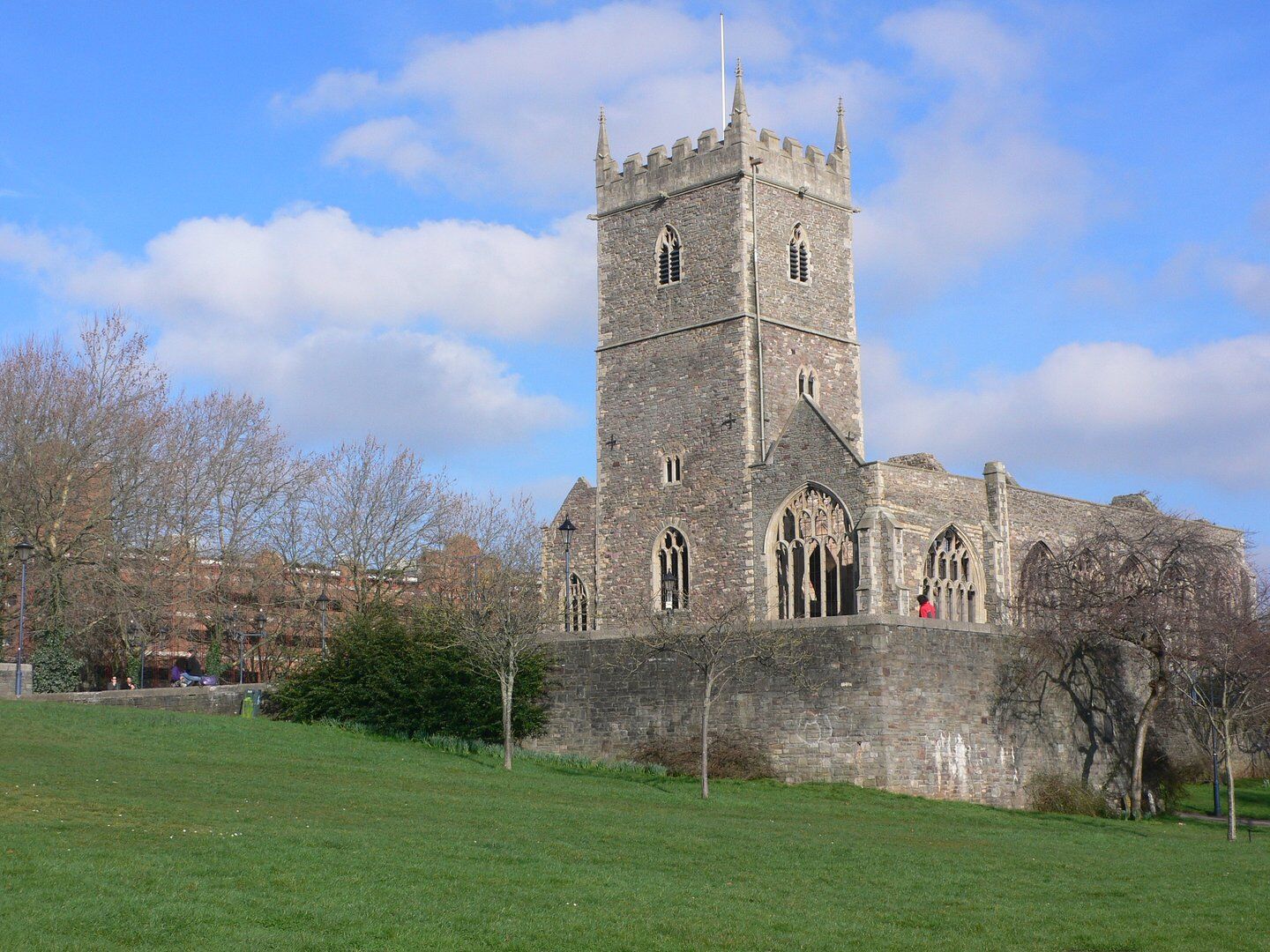
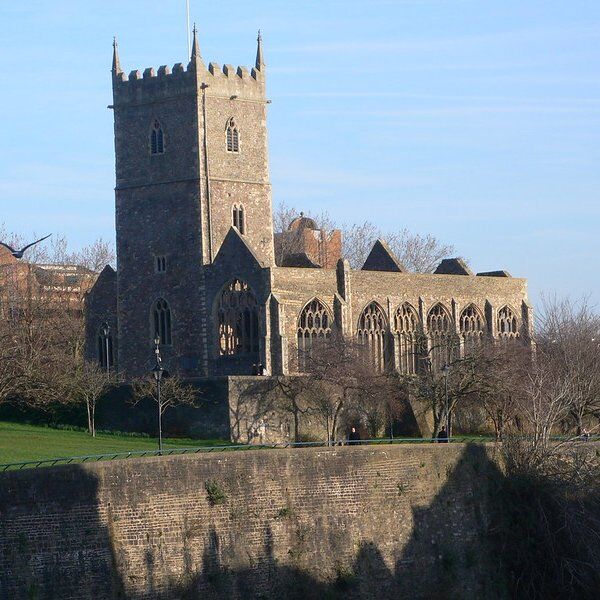
Standing as the solemn centrepiece of the park, the shell of St Peter’s Church is perhaps one of the most emotive landmarks in the city.
Founded in the 11th century, it was widely considered the oldest church in Bristol, serving as the spiritual heart of the community for nearly nine hundred years.
That history was irrevocably changed on the night of 24th November 1940. During the Bristol Blitz, the church was struck by incendiary bombs, leaving only its fourteenth-century tower and charred outer walls standing. Rather than being rebuilt, it was preserved in its ruined state.
The Forgotten Streets of Mary-le-Port
It is difficult for us and any modern visitors to imagine, but the peaceful green lawns surrounding the church were once some of the busiest commercial streets in the West Country.
Before the 1940s, this area was the Mary-le-Port district, a thriving, slightly claustrophobic quarter of timber-framed houses, independent shops and bustling taverns. Instead of birdsong, you’d have heard the noisy commotion of trade and commerce, because Mary-le-Port Street and High Street once criss-crossed these exact grounds. Narrow and vibrant, this is where merchants of all kinds had sold and traded their wares for centuries.
Traces in The Turf
While the buildings are gone, they are not entirely forgotten. If you look closely at the "sunken" areas and the low stone walls that punctuate the grass, these stones actually trace the original footprints of the shops and homes that were destroyed.
Similarly, the herb garden adjacent to St Peter’s is built exactly within the footprint of the former churchyard and vestry, using the original walls as boundaries.
Did you know?
The "hills" you climb in Castle Park aren't natural. When the city was cleared after the Blitz, much of the rubble from the old shops and houses was piled up and covered with soil. When you sit on those grassy banks, you are literally sitting on the remains of 19th-century Bristol.
To conclude your journey through Castle Park Bristol, it is important to ground the reader back in the present. This final section shifts the focus from what was lost to what has been gained: a space for quiet reflection and modern exploration.
Final Thoughts and How to Visit Castle Park Bristol
Now that you know a little bit more about its past, I’m sure you’ll agree that Castle Park Bristol is far more than just a convenient shortcut between the city centre and the harbour.
It is a living palimpsest, a place where the history of Bristol has been written, erased, and rewritten over the course of a millennium. From the iron-fisted rule of Norman kings to the vibrant bustle of a lost medieval neighbourhood, the park serves as a silent witness to the city’s incredible capacity for survival and renewal.
Next time you find yourself walking along its paths or through the grass, take a moment to look beyond the greenery.
In a world that is constantly moving forward, Castle Park invites us to slow down and listen to the hidden stories beneath our feet. In our opinion, it remains a poignant reminder that while buildings may fall and landscapes may change, the spirit of the city, resilient and ever-evolving, remains firmly rooted in the earth.