You might think you know all there is to know about Manchester, but we’re here to prove you wrong.
Beyond Britpop, football, incredible cuisine and pioneering technology, the history of Manchester is a tapestry of world firsts and bizarre coincidences. So strange, in fact, that some things can sound more like local legends than facts.
Be that as it may, we’ve put our heads together to come up with 12 obscure facts about Manchester that reveal the hidden gems and Cottonopolis secrets that even the most seasoned Mancunians might have missed.
Read to find out what you never knew you never knew…let’s get into it!
And just so you know - nobody pays us to be featured here. They’re just our recommendations to you, so you can find the best things to do in Manchester.
1 - The First Written Reference to Manchester Was Made by King Edward the Elder
Nobody these days gets a cool title like King Edward the Elder, do they?
One of the best facts about Manchester is that we can actually trace the first time the city’s name was written down to the year 919 CE.
The writers of the Anglo-Saxon Chronicle thankfully included an inscription that tells how King Edward the Elder “sent men to Mameceaster, in Northumbria, to repair and man it,” which I (foolishly) like to think was his way of influencing the development of the name.
2 - The Romans Had a Road to Liverpool Underneath Castlefield
If you’ve ever fancied walking in the footsteps of a Roman, you’ll be delighted to know that you probably already have. That is, if you’ve been to Castlefield.
In 2025, archaeologists discovered a remarkably “well-preserved” Roman road in Castlefield just below street level. Even more astonishingly, they could see that the road had been repaired in places and contained no potholes.
3 - The Curry Mile (Probably) Once Had The Most Neon Signs in The UK
One of the most interesting facts about Manchester is that the incredible Curry Mile is famous for more than just its delicious cuisine.
During the ‘90s and 2000s, the Curry Mile was frequently cited as having the highest concentration of neon signage in the United Kingdom. Some even went so far as to say that it was so bright you could see it from space (although, let’s be honest, that’s a bit of a stretch!).
Take on Race Across The World: The Experience
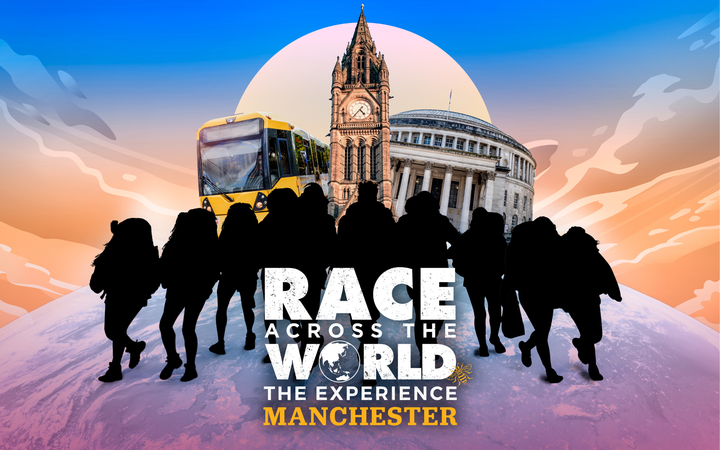
Did you know that Race Across the World: The Experience is now available in Manchester?
Race Across the World: The Experience is the official live experience of the award-winning hit TV show, brought to life in a high-stakes adventure across Manchester.
Important Info: You must be 18+ to purchase tickets. The experience is designed to be accessible and inclusive. See FAQs for details.
4 - Nominative Determinism Might Have Played a Role in British Vegetarianism
Vegetarianism has been around for thousands of years in some parts of the world, but the concept was popularised in the UK by none other than Reverend William Cowherd in 1815.
Not only that, but he told his congregation at no less than the Beefsteak Chapel in Salford that eating meat was sinful. He and his followers eventually formed the Vegetarian Society in 1847.
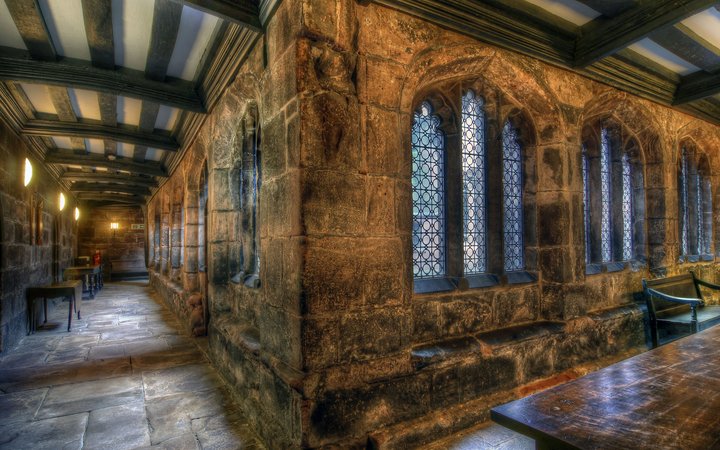
Photo: ©Chetham's Library
5 - Manchester Influenced Friedrich Engels’ Political Views
To us, it might sound like a gap year put to good use, but for Engels, it was life-changing.
In 1842, Engels was sent to Manchester from Prussia by his dad to establish Erman & Engels, the family textile company in England.
When he arrived, however, Engels was immersed in the shocking and often brutal living conditions of the working classes. So much so, that in 1842 he wrote a book about it that would change the course of history all over the world: The Condition of the Working Class in England.
6 - The Original “007” Lived in 16th-Century Manchester
His name was Dee, Dr John Dee. Whether he liked it shaken or stirred, we don’t know, but we do know that he was a warden of the Manchester Collegiate Church, alchemist and advisor to Queen Elizabeth I.
Apparently, he signed his letters to Queen Bess with a 007 symbol to let her know that the letters were covert and to keep them private.
More Interesting Facts About Manchester
7 - The Name “Vimto” is Actually a Portmanteau
Back in the early 20th century, you wouldn’t have ordered a Vimto. You’d have ordered a Vimtonic which purported to give you vim and vigour!
Sugary, delicious and fruity, the popular drink invented in Manchester is available in supermarkets all over the world and is particularly popular in the Middle East due to it being popular for breaking the fast during Ramadan.

8 - “Manchester” Is a Byword For Textiles All Over the World
One of the most interesting facts about Manchester is that due to its fame as a former textile capital, countries from all over the world have adopted the city’s name to mean all kinds of fabrics.
In Australia and New Zealand, “Manchester” is used to describe bedding and towels. In Sweden, it’s used to describe corduroy trousers.
9 - A Manchester Museum Has Housed a Mummy for 200 Years
As of April 2025, 2,700 year-old Asru, a priestess from Thebes, has been kept at Manchester Museum for 200 years.
“Given” to the museum in 1825 by the sons of a slave trader and cotton merchant, Asru has been examined by scientists, historians and museum curators for two centuries. Incredibly, we know that Asru was around 50 to 60 years old when she died, and that she had evidence of arthritis in her neck.
In the 1970s, The Greater Manchester Police even took her fingerprints and were able to determine that she had lived a relatively “easy” life.
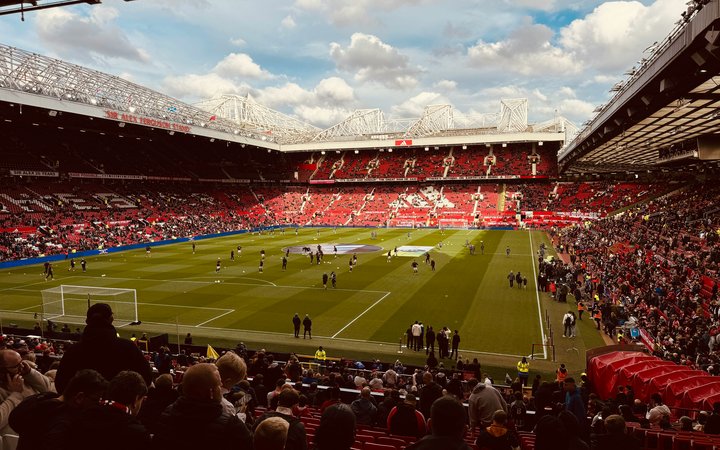
10 - The World’s First Professional Football League was Set Up in Manchester
Unsurprisingly, one of the best facts about Manchester involves football, but all is not quite what it seems.
It’s true that in April 1888, the world’s first professional football league was set up at the Royal Hotel in Manchester but the 12 forming teams might surprise you.
According to a report in the Blackburn Standard from the time, the 12 forming teams were Preston North End, Blackburn Rovers, Accrington, Burnley, Bolton Wanderers, Everton Wanderers, Derby County, Nottingham County, Stoke, Wolverhampton Wanderers, West Bromwich Albion, and Aston Villa.
11 - Manchester Is The UK’s First Nuclear-Free City
Plenty of firsts have happened in Manchester, but this one is particularly interesting.
On 5 November, 1980, Manchester Council officially declared itself the first Nuclear Free City.
This was in direct opposition to the government’s official stance on nuclear arms during the Cold War, and was in defiance of the civil defence pamphlets that were being issued at the time.
12 - There’s A Statue of The Highest Paid Woman Actor of the 1930s in Rochdale
Finally, one of the most intriguing facts about Manchester is that it was the home city of one of the most successful actresses in the world in the 1930s.
The name “Gracie Adams” may not ring a bell for everyone these days, but until her death in the 1970s, she was one of the best-regarded comedians and actresses in the world.
She was born above a fish and chip shop in Rochdale in 1898 and her statue was the first of a woman built in Greater Manchester in a century.
Find More Things to Do in Manchester with CityDays
If you’re looking for more tailored ideas of fun things to do, check out our other guides:
- 16 Incredible Places to Visit in Manchester for Free
- Quirky Things to Do in Manchester
- Things to Do in Manchester for Couples
- Birthday Ideas in Manchester
- Date Ideas in Manchester
- Things to Do in Manchester for Young Adults
And if you’re in the mood for some exploration, why not sign up for an adventure?
At CityDays, we create fun, interesting and challenging treasure hunts around the world to help you immerse yourself in a city’s culture, history and hidden secrets.
Want to find out more?