
Tucked away between Fleet Street and the River Thames, Temple Church is one of the city’s most distinctive and historically rich places of worship. But let’s be honest, it’s massively overshadowed by the likes of Westminster Abbey and St Paul’s Cathedral.
But if you pay attention, you’ll find much more than just a peculiar-shaped place of worship.
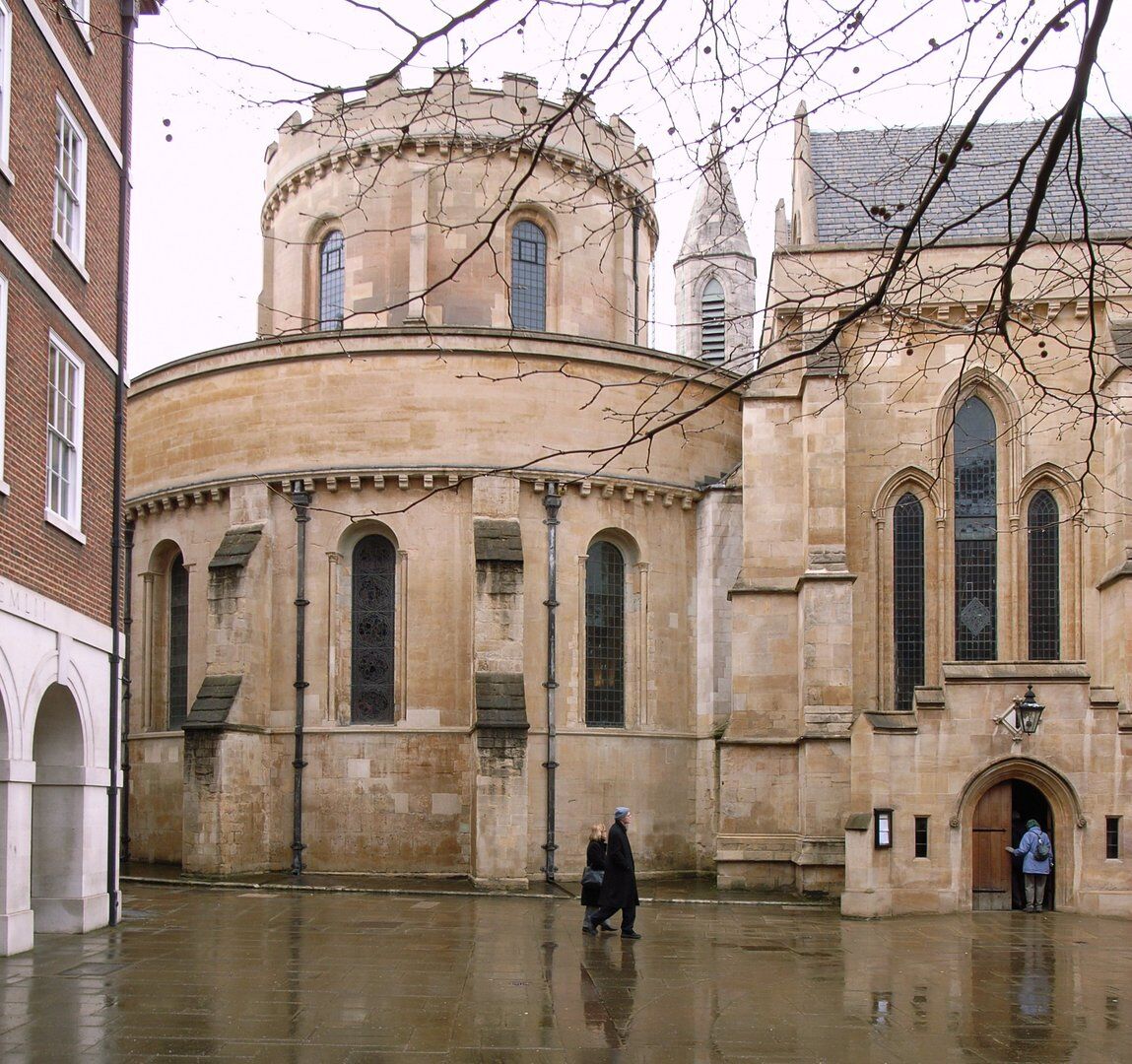
Founded in the late 12th century by the Knights Templar, Temple Church reflects the power and influence of this enigmatic medieval order at its peak. The famous round nave was inspired by the Church of the Holy Sepulchre in Jerusalem, and it’s a tantalising link to London’s connections to the Crusades and medieval Europe.
From the start, the church has been associated with kings, knights, and moments of national significance, such as the signing of the Magna Carta. Oh, and even Hans Zimmer’s musical score for the blockbuster Interstellar film.
Come with us as we explore one of London’s most intriguing religious buildings. Watch your step, because we’re about to uncover a treasure trove…

The History of Temple Church
Like with so many of London’s landmarks, the history of Temple Church is so long and winding that it can honestly feel overwhelming. Then we start bringing in knights, templars, kings and cartas, and by that stage, we might as well be telling you a fairytale. But in this case, it’s all true.
The Founding of Temple Church (12th Century)
The origins of Temple Church go back to the rise of Knights Templar in medieval England. At this time, Christianity was firmly established in the country and London was slowly becoming an increasingly important political, financial and religious centre.
What Was The Knights Templar?
There are no silly questions here so, if you already know this bit, feel free to skip ahead.
The Knights Templar were a military religious order founded in the early 12th century to protect Christian pilgrims travelling to the Holy Land.
Members were a kind of hybrid of monks and knights: they took vows of poverty, chastity and obedience, while also operating as highly trained warriors. Over time, the order became immensely influential across Europe, enjoying papal protection and extensive royal patronage.
The Templars came to London as part of this expanding European network. England offered wealth, political stability, and proximity to royal authority, making it an ideal base for the order’s activities. Their London headquarters, known as the New Temple, was strategically positioned between the City of London and Westminster, close to the Thames for ease of travel and communication. This location would later give the area (and Temple Church itself) the name we still use to this day.
Perhaps the less glamorous side of the Knights Templar was that they were akin to the original Finance Bros of London. They played a crucial role in medieval finance, acting as bankers to kings and nobles, safeguarding treasure and facilitating international money transfers.
Building Temple Church (c. 1185 A.D)
Temple Church was commissioned by the Knights Templar as their principal place of worship in London, replacing an earlier site at Holborn. Construction of the distinctive Round Church was completed by around 1185, during the reign of King Henry II, who was a notable supporter of the order. In fact, Henry II and the Knights Templar were so close that he even entrusted them with “care money” for Thomas Becket’s penance.
The church was formally consecrated in 1185 by Heraclius, Patriarch of Jerusalem, and, according to some sources, King Henry II was there to witness it. The round design of the nave, inspired by the Church of the Holy Sepulchre in Jerusalem, marked Temple Church out from other medieval London churches and symbolised the Templars’ mission in the Holy Land.

Decline of the Templars and Temple Church’s New Era
As important as the Knights Templar was, however, their place in history wasn’t to last for long.
The fortunes of Temple Church changed dramatically in the early 14th century with the fall of the Knights Templar. Once one of the most powerful and wealthy institutions in medieval Europe, the order fell victim to political pressure and suspicion.
In 1307, King Philip IV of France ordered the arrest of the Templars in his realm, accusing them of heresy and corruption. Under intense pressure, Pope Clement V eventually moved to suppress the order across Christendom, and by 1312 the Knights Templar had been formally dissolved.
In England, the suppression unfolded more gradually but with lasting consequences. The Templars were arrested, their properties seized, and their assets placed under royal control. Temple Church, long the spiritual heart of the order’s London headquarters, passed out of Templar hands. Although many of the accusations against the order were later regarded as unfounded, the damage was irreversible, marking the definitive end of the Templars’ presence at the Temple and a turning point in Temple Church medieval history.
Following the dissolution of the order, Temple Church and its surrounding estates were transferred to the Knights Hospitaller, another military religious order with roots in the Crusades. While the Hospitallers became the nominal owners, they did not occupy the site in the same way as the Templars. Instead, the Temple increasingly came under the influence of the Crown, which leased the buildings to legal professionals, laying the foundations for the later Inns of Court.
By the later Middle Ages, Temple Church had evolved from a crusader stronghold into a church serving a growing legal community.
Damage, Restoration, and Temple Church During The Second World War
Right at the beginning, we mentioned that Temple Church often gets overlooked by its more famous counterparts. What many people don’t realise is that Christopher Wren, architect of St Paul’s Cathedral, left his mark on Temple Church too.
Although Temple Church managed to escape damage during the Great Fire of London in 1666, Wren was tasked with refurbishing it (presumably because it was already looking a bit old and dilapidated. We shouldn’t be too harsh, it was already 500 years old!). Wren modified the interior, adding an altar screen and, incredibly, added the church’s first organ.
Not wanting to be left out, the Victorians also gave Temple Church a restoration in 1841 by decorating the walls and ceiling. Supposedly, they were trying to make the church look more authentic.
However, the real devastation to Temple Church came during the Second World War, when the ancient building suffered some of the most severe damage of any historic church in London.
During the Blitz, the Temple area was heavily targeted because of its proximity to the legal district and the River Thames. In May 1941, incendiary bombs struck Temple Church, igniting a devastating fire that raged through the medieval structure.
The destruction was extensive. The roof of the Round Church collapsed, the interior was gutted by flames, and priceless fittings, including woodwork and historic furnishings, were lost.
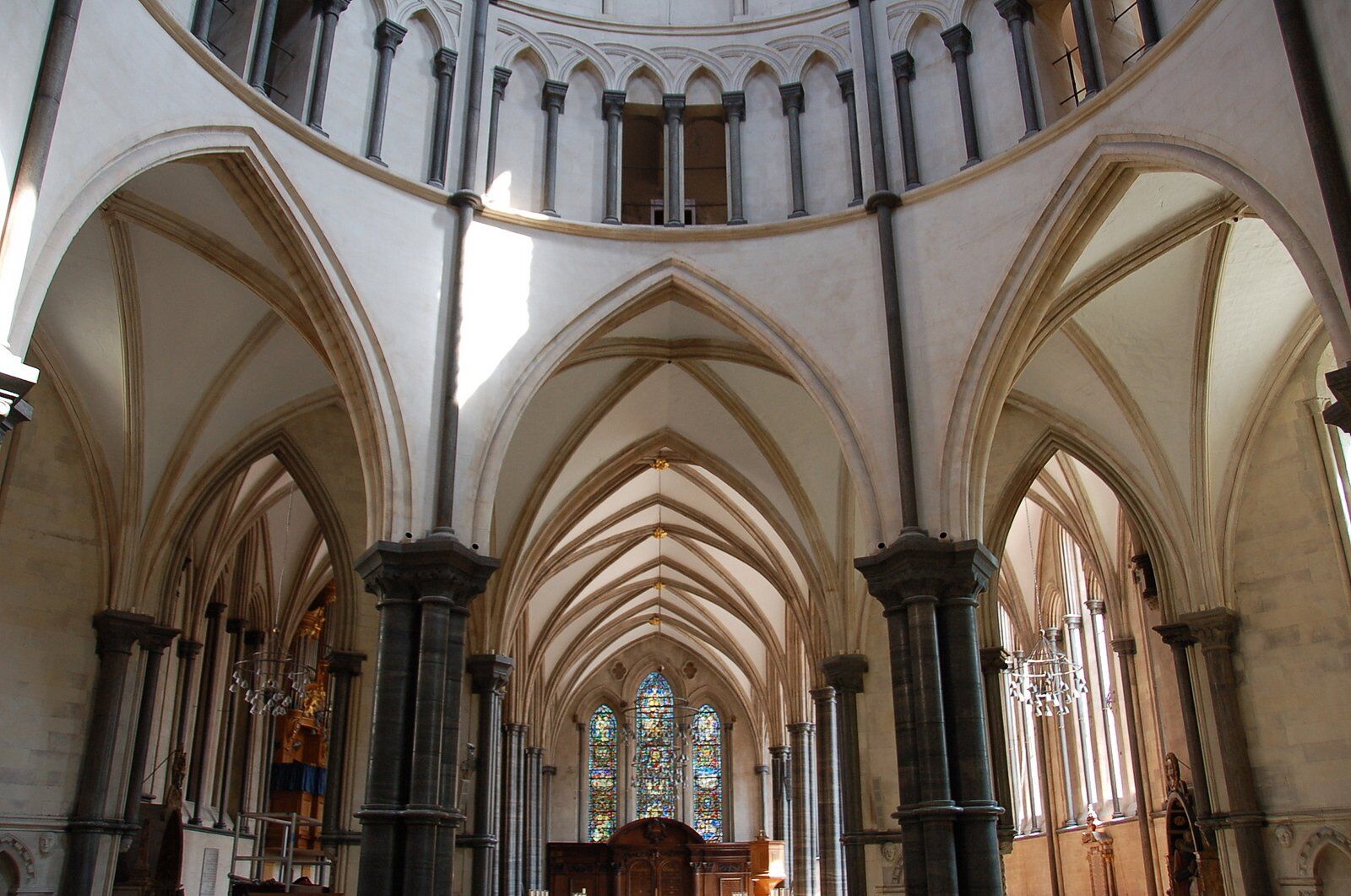
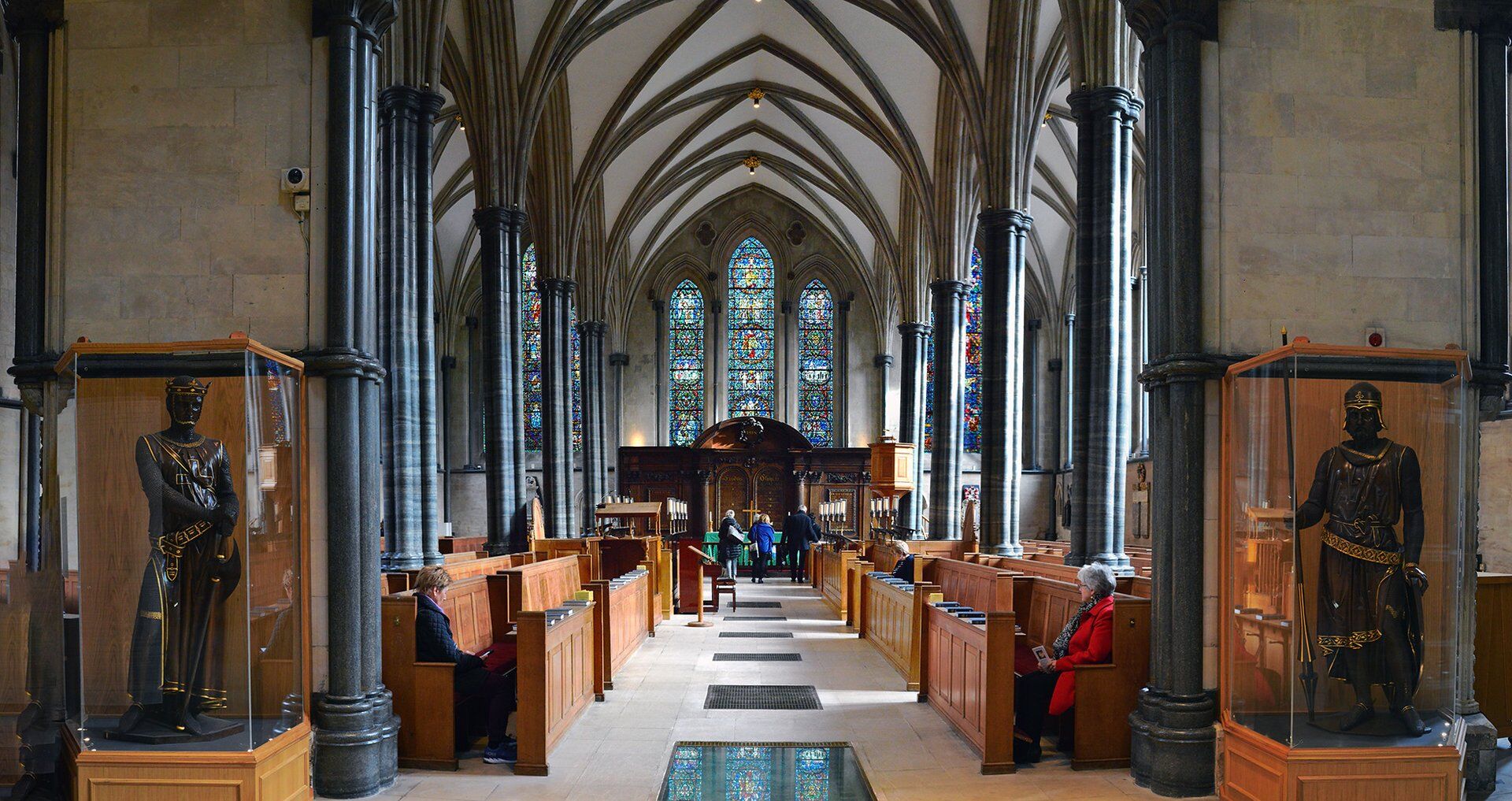
In the years following the conflict, a careful and ambitious restoration programme was undertaken. Rather than attempting a purely modern reconstruction, architects and historians sought to return Temple Church to its medieval character while incorporating discreet modern reinforcements. The restoration, completed in the 1950s, reinstated the roof, repaired the effigies, and revived the church’s renowned acoustics.

Temple Church in Popular Culture
If you’ve heard of Temple Church somewhere before but you just can’t place where, it’s probably thanks to Dan Brown’s The Da Vinci Code, where it is presented as a key location linked to the Knights Templar and the Holy Grail. It’s worth bearing in mind that this was a fictional portrayal but it certainly helped the church gain global notoriety.
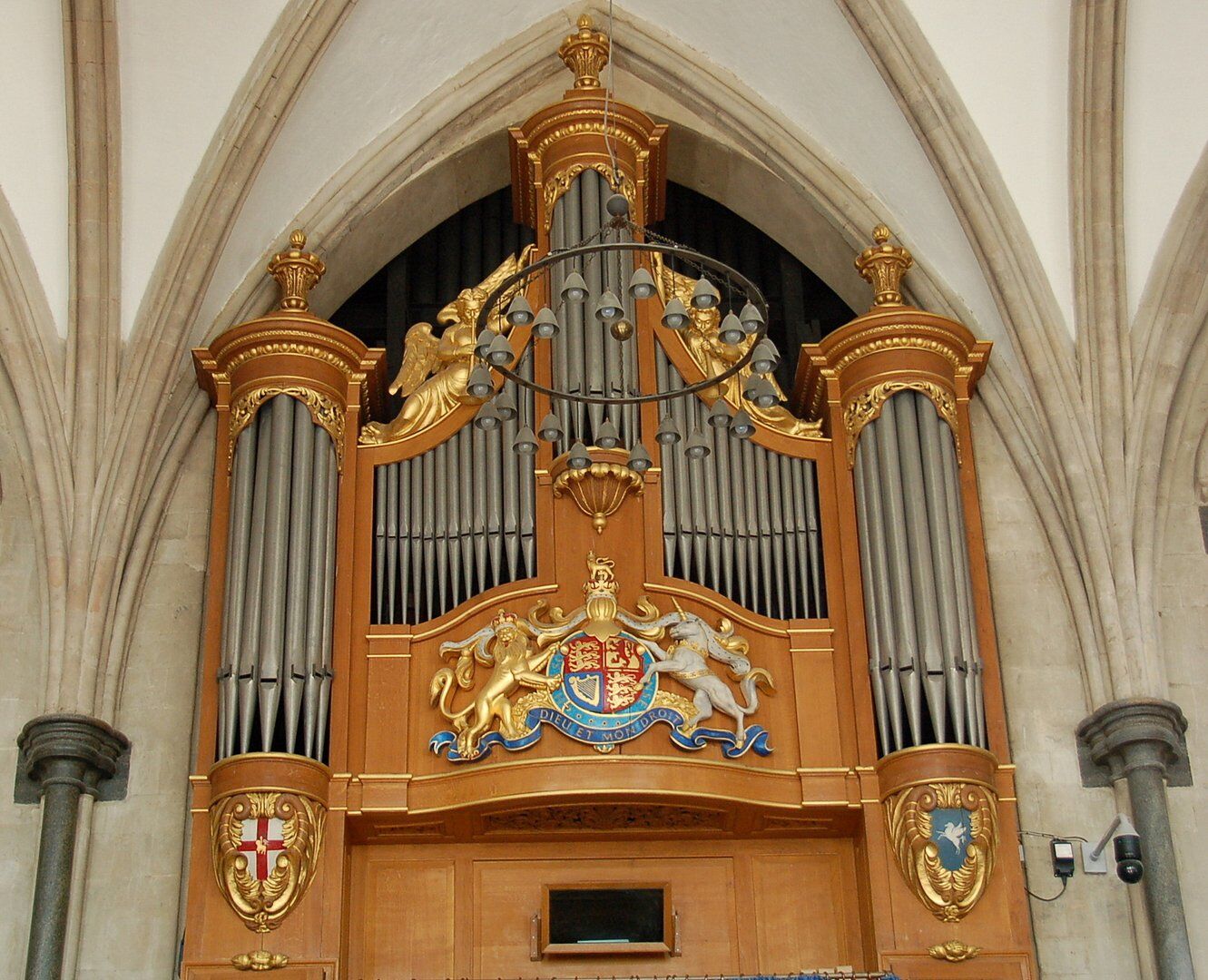
Beyond literature, Temple Church is also widely known for its music. Remember the organ we mentioned in the last part? Well, that was selected by none other than Hans Zimmer while composing the musical score for Interstellar.
According to ClassicFM, the final recording saw Hans Zimmer and director Christopher Nolan heading to Temple Church to record on the 1926 four-manual Harrison & Harrison organ, played by the then-church’s music director, Roger Sayer.

Visiting Temple Church Today
If you’re planning to explore London beyond the usual landmarks, Temple Church is well worth seeking out. Firstly, it’s much less busy than Westminster Abbey or St Paul’s Cathedral, and it’s super easy to seek out. In fact, you’d never really know it was there unless you happen to stumble across it, despite being just minutes away from the City’s hustle and bustle.
Opening Times
Temple Church is an active place of worship, so opening times can vary, but visitors can usually expect:
- Weekdays: Morning to mid-afternoon
- Saturdays: Limited opening (often late morning)
- Sundays: Generally open for services only
Remember to check the official website before you visit for up-to-date Temple Church opening information.
Location and Nearest Tube Stations
Temple Church is centrally located and easy to reach on foot once you’re nearby:
- Temple (District & Circle lines) – closest station
- Blackfriars (District & Circle lines, National Rail)
- Chancery Lane (Central line)
From Temple station, it’s just a short walk through the historic Inner Temple to reach the church.
Find More Things to Do in London with CityDays

Whatever your interests are, there’s always something new for you to discover in London.
In fact, you don’t have to go out of your way at all to find them - you just have to know where to look.
Discover London’s secret sights and noteworthy nooks by playing one of our London treasure and scavenger hunts, food experiences, escape room games or walking tours.
Looking to provide the best team building activities in London? Look no further.
You’ll find curated trails and hunts all over London, including Central London, Mayfair, Shoreditch, Kensington and Southwark.
All you have to do is team up with your partner, friends, family or whoever to solve riddles, complete challenges and answer trivia to lead you on an unforgettable journey around London’s most intriguing streets.
The best part? We’ll recommend top-rated pubs, cafés and restaurants and give your team the chance to earn rewards by competing on our leaderboard.